How to Choose a Used 100-Ton Truck Crane for Port Lifting in Mozambique?
Quick Answer: For heavy piece loads in and around Mozambique's ports — transformers, project cargo, steel and mineral consignments that the terminals' own harbour cranes do not cover — a used 100-ton truck crane is the flexible heavy-lift unit to buy. Shortlist the XCMG QY100K-I or the Sany STC1000C7, model years 2018–2021, with a complete factory counterweight set (this decides rated capacity more than any other option), verified hours, and a mandatory Intertek pre-shipment inspection before the vessel sails. Budget 5% import duty plus 16% VAT: a 2021 Sany STC1000C7 listed at USD 175,000 FOB China carries roughly USD 38,000 in duty and VAT alone at a USD 175,000 CIF value.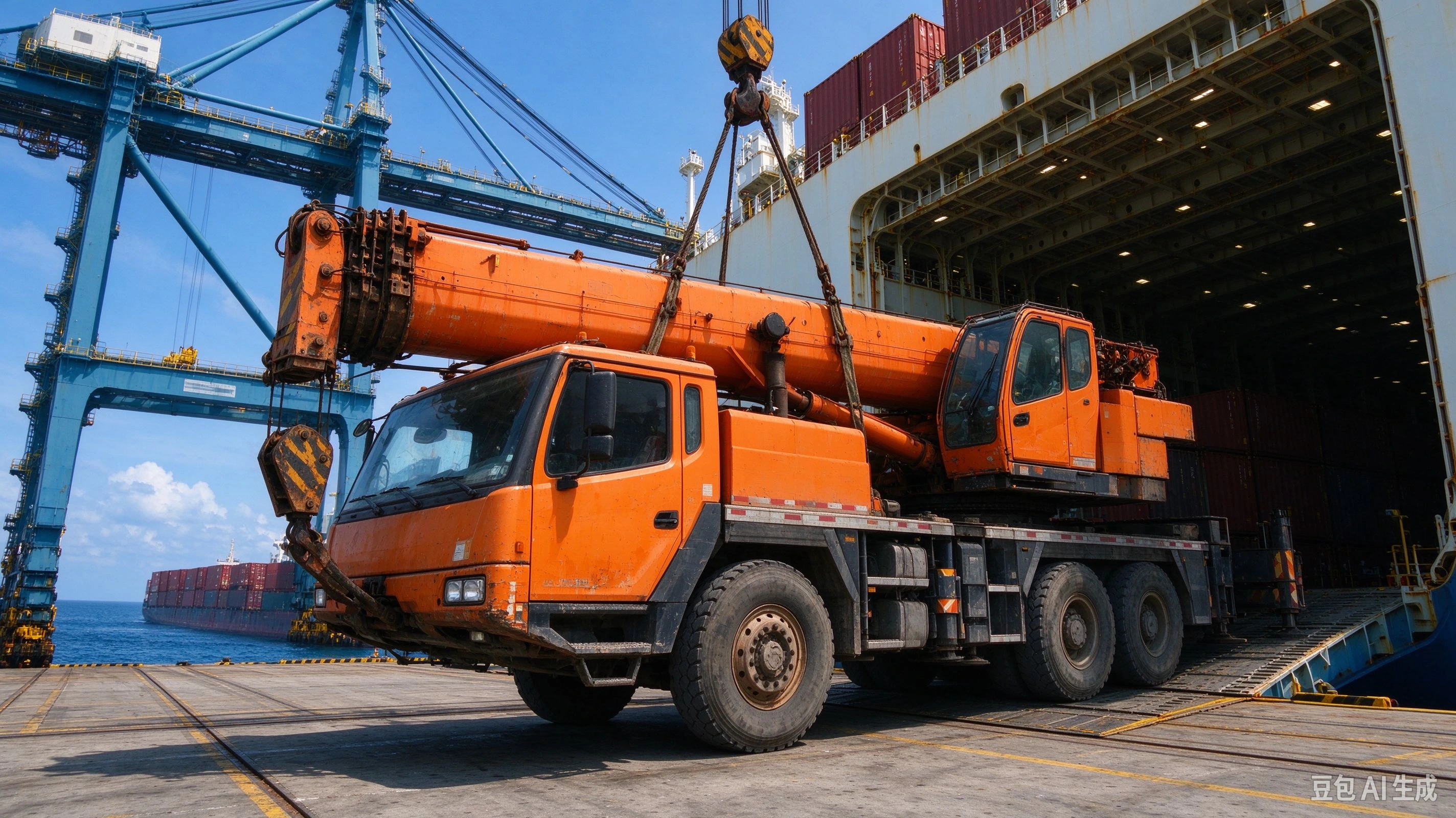 Key Takeaways
• Port demand is real and current: Maputo Port handled a record ~32 million tonnes in 2025 and MPDC commissioned two new Liebherr LHM 550 mobile harbour cranes in September 2026; Beira's Cornelder signed a USD 25 million crane purchase with Sany in December 2025 and plans USD 120–125 million of investment. Piece-load and project work around these terminals is growing.
• The 100 t rating only exists at short radius with full counterweight: the QY100K-I delivers 3,450 kN·m at the base boom (100 t at 3 m), but on the fully extended boom the moment falls to about 1,925 kN·m — roughly 7–8 t at 24 m radius. Match the crane to the load-radius pair, not to the badge number.
• Counterweight is the make-or-break option: the Sany STC1000C7 carries up to 38.5 t of counterweight (travels with 27.5 t), and missing blocks are the most common hidden deduction on used 100-ton units — one 2012 QY100K sold at a Chinese court auction had its counterweights excluded from the valuation entirely.
• Mozambique requires an Intertek pre-shipment inspection (MOZ number) before shipment and an ECTN/BESC cargo tracking note; cranes enter in the capital-goods band at 5% duty plus 16% VAT. No hard age ban, but used machinery over 5 years can face technical-inspection restrictions — target 2018–2021 units.
• Ocean freight is breakbulk/flat-rack territory: a 54.6 t, 16 m long, six-axle unit moves Shanghai–Maputo/Beira in 25–45 days, and after arrival you have about 7 days to clear or demurrage escalates daily (auction risk after ~15 days).
Which specs actually matter for port lifting in Mozambique?
Port lifting in Maputo, Beira and Nacala is piece-load work: transformers and switchgear for mining and LNG supply chains, breakbulk steel, mineral consignments, and project cargo moving through the corridors to Zimbabwe, Zambia and Malawi. The terminals themselves run Liebherr mobile harbour cranes and ship-to-shore units — your 100-ton truck crane earns its place on the loads those cannot reach economically: yard and backgate work, project sites beside the port, and heavy lifts inland on the Maputo and Beira corridors.Not every "100-ton" machine on the market is built for this. Port work means sustained lifts at medium radius with full counterweight, quayside and yard surfaces that demand correct outrigger spread and matting, and road transfer between job sites on a multi-axle lowbed. Table 1 compares the two mainstream Chinese 100-ton truck-crane platforms using factory-published data.
Table 1. Factory specifications — used 100-ton truck crane candidates (manufacturer data)
Specification | XCMG QY100K-I | Sany STC1000C7 | Why it matters for port lifting |
|---|---|---|---|
Max rated capacity | 100 t at 3 m radius | 100 t | The rating assumes full counterweight and short radius |
Base-boom lifting moment | 3,450 kN·m (4 m × 88 t) | 4,027.8 kN·m | Heavier pieces at short radius — transformers, machinery |
Fully extended boom | 51 m (moment ~1,925 kN·m) | 73.2 m (moment ~1,784 kN·m) | Reach for yard stacks and vessel superstructure work |
Boom + jib height | 70.4 m (51 + 18.1 + 4 m) | 90.7 m | Long-reach lifts; jib needed above ~70 m |
Outrigger span (lat. × long.) | 7.6 × 7.56 m | 8.1 × 7.3 m | Sets the pad area you need on quay and yard surfaces |
Travel mass | 54,900–58,000 kg | 6 axles 54,600 kg | 6 axles Lowbed transport and corridor bridge limits |
Tail swing radius (with counterweight) | 4.2 m | 4.5 m (fixed counterweight) | Clearance planning in narrow yard lanes |
Counterweight +5 t added (factory update; tail radius 4.2 m) | Up to 38.5 t, travels with 27.5 t | 2025-year C7-8: 25 t standard | Missing blocks directly cut rated capacity |
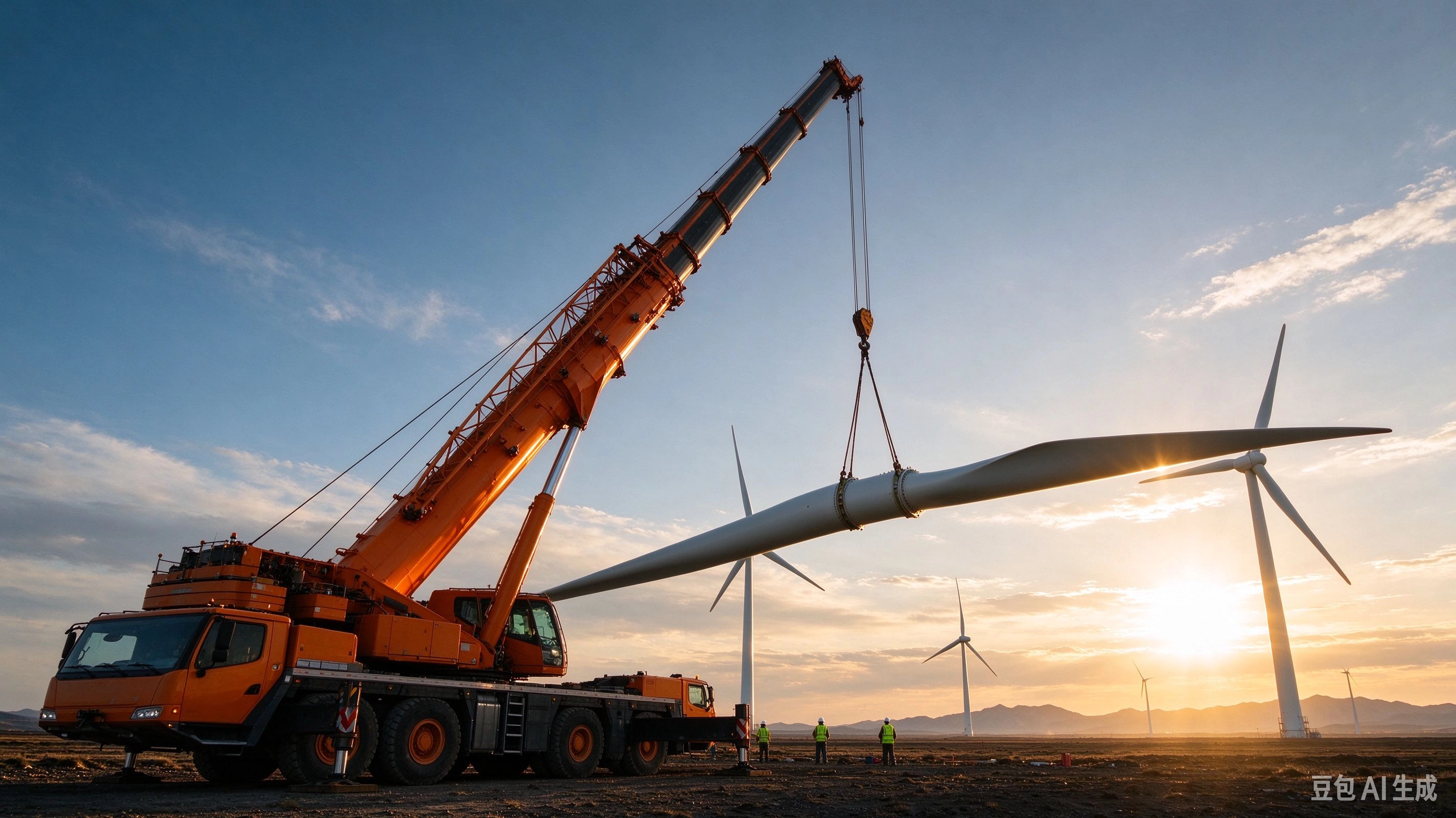
Within this class, the practical rule is: buy the load-radius pair, not the tonnage badge. A transformer lift of 60–80 t must sit within ~6–10 m radius at full counterweight; container and steel-column work at 20–30 m radius falls to roughly 7–16 t per pick on these machines. If your tender list is dominated by long-radius work at modest loads, the longer boom of the STC1000C7 pays; if it is short-radius heavy pieces, the base-boom moment decides. Before you commit, cross-check brand durability in the best used equipment brands for African construction and pricing direction in our used construction equipment market trends 2026.
Which inspection points matter most before you buy?
Before shipping to Mozambique, verify four evidence blocks — the same discipline we apply in our guide on how to inspect used machinery before buying: 7 key areas to check:
1. Counterweight and structure. Count the counterweight blocks against the factory manual and photograph every block and pin. A 2012 QY100K sold on a Chinese court-auction platform in 2021 carried only 3 blocks, and the appraisal explicitly excluded counterweights from the valuation — they were negotiated separately. Check boom sections for re-welds, boom pin and bushing wear, and the turntable for cracks.
2. Hydraulics. Main winch line speed under load, boom luffing drift test, outrigger jack holding test, pump case-drain leakage, oil cleanliness sample. A worn main pump or luffing cylinder on a 100-ton class machine runs five figures to replace.
3. Chassis and transport readiness. Six-axle drivetrain, brakes, tyre condition (the STC1000C7 runs 385/95R25 + 325/95R24), and confirm which counterweight mass the unit can legally travel with — Sany rates the C7 to travel with 27.5 t of its 38.5 t. Plan the multi-axle lowbed and any corridor permits before purchase, not after.
4. Cab, electronics and safety systems. Torque limiter (load moment indicator) calibration with a test weight, hook overwind switch, camera and displays, air conditioning. An uncalibrated torque limiter is both a safety hazard and a compliance problem — recalibration capacity in Mozambique is limited, so verify it before shipment.
Verify hours against wear on pedals, seat and joystick, and match the boom and chassis serial numbers to the contract. Every machine should ship with a video timeline of the actual unit — cold start, boom extend/retract under load, outrigger cycle, winch linespooling.
What does the full cost and import process look like?
What does the full cost and import process look like?
The machine price is only part of the landed cost. Mozambique imports run on a defined chain: Intertek pre-shipment inspection in the origin country (issuing the MOZ tracking number), the ECTN/BESC electronic cargo tracking note (mandatory since 2013 — carriers will not release bills of lading without it), then customs clearance through the DU (Documento Único) with pre-declaration lodged about 72 hours before arrival.Table 2. Landed-cost breakdown, used 100-ton truck crane, China to Mozambique (2026 indicative)
Cost item | Typical range / rate | Notes |
|---|---|---|
Machine, FOB China (2018–2021) | USD 80,000–175,000 | Listed examples: 2021 STC1000C7, 1,800 h, one owner — USD 175,000 FOB; 2021 QY100K-II listed at USD 80,000. The spread reflects counterweight completeness, jib, hours and paperwork — verify per unit |
Ocean freight, Shanghai/China port → Maputo or Beira USD | 15,000–30,000 (quote-based) | Breakbulk or flat rack for a 54.6 t, 16 m unit; 25–45 days sailing. Quote per shipment with a lashing plan |
Intertek PSI + MOZ number | USD 500–2,000 | Mandatory before shipment; used machinery also needs age proof and technical-inspection documents |
ECTN/BESC cargo tracking note | Quote-based | Mandatory since 2013; no original B/L without it |
Import duty (capital goods, HS 8426 band) | 5% of CIF | Confirm the exact tariff line with your clearing agent |
VAT (IVA) | 16% of (CIF + duty) | Mozambique's standard rate; older references citing 17% are outdated |
Port, clearing and broker fees | USD 1,000–3,000 | Original B/L only — telex release is refused; pre-declaration ~72 h before arrival |
Inland transport | Quote-based | Multi-axle lowbed; short legs on the Maputo corridor, longer (and costlier) Beira → Tete on the N6 |
Indicative total taxes on a USD 175,000 CIF | ≈ USD 38,150 | Duty 8,750 + VAT 29,400 (~22% of CIF), before freight, fees and inland transport |
Timing note: cargo must clear within about 7 days of arrival or demurrage escalates daily, with auction risk after roughly 15 days — have your broker, DU and tax registrations ready before the vessel departs China. Payment structure follows the same staged logic as any used-machine import; see our complete guide to buying used machinery from China.
What are the most common pitfalls — and who carries the risk?
• Incomplete counterweight. Rated capacity charts assume the full factory block set; a crane delivered two blocks short can lose its headline performance exactly when you need it. Risk boundary: the seller warrants the complete block count per the factory manual; verify with photographs before the balance payment.
• No pre-shipment inspection. Shipping without the Intertek MOZ inspection means clearance failure or penalties at Maputo. Risk boundary: the seller arranges and passes PSI before departure; any offer that pushes this to the buyer is a red flag.
• The 7-day clearance window. Mozambican ports escalate demurrage daily after ~7 days and can auction cargo after ~15. Risk control: appoint the clearing agent early, lodge pre-declaration, and use an original B/L — telex or sea-waybill release is refused.
• Age and document gaps. Used machinery over ~5 years can face technical-inspection restrictions; missing age proof, maintenance records or emission documents stall clearance. Risk control: target 2018–2021 units and assemble the document set before signing.
• Trusting the badge price. A USD 80,000 listing and a USD 175,000 listing for same-year 100-ton units differ in counterweight, jib, hours and paperwork. Risk control: price only against a verified spec sheet, inspection video and serial-number match — never against the listing headline.
• Uncalibrated torque limiter. Discovered after arrival, recalibration capacity is scarce. Risk control: test-lift with a certified weight before shipment and record it in the handover file.
Responsibility boundaries: the seller covers pre-shipment condition, the complete counterweight set, export documentation and PSI cooperation; the buyer covers the ECTN/BESC, duty, VAT, customs clearance and inland transport — unless a DDP agreement states otherwise. Nothing in this article overrides the signed contract.
How we evaluated this guide
This guide draws on factory specification publications from XCMG and Sany for the QY100K-I and STC1000C7 platforms, Mozambique port developments reported by Maputo Port Development Company and Cornelder de Moçambique (2025–2026), tariff and VAT data from the Mozambican Autoridade Tributária and pre-shipment inspection requirements (Intertek MOZ scheme), and live listing prices for 2018–2021 100-ton units observed in 2026. Regulations and freight rates move — re-verify every figure with your clearing agent and carrier at the time of your own transaction. Nothing here is customs, legal or purchase advice.FAQ
Ports already run Liebherr harbour cranes — why buy a 100-ton truck crane at all?
Terminal cranes serve vessel operations inside the terminal. Truck cranes cover piece loads outside that envelope: backgate and yard work, project sites beside the port, transformer and machinery lifts inland on the corridors, and backup when the harbour cranes are committed. That is the demand band a used 100-ton unit buys into.
Can the counterweight travel with the crane?
Partially. Sany rates the STC1000C7 to travel with 27.5 t of its 38.5 t set; the C5-8 carries 21.5 t on the chassis. Extra blocks and outrigger mats move by truck. Confirm the travel configuration and axle loads before quoting transport.
Is there an age limit for importing a used crane into Mozambique?
No hard ban, but used machinery over about 5 years can face technical-inspection restrictions and closer scrutiny, and the practical sweet spot is 2018–2021. The Intertek PSI is mandatory regardless of age.
Which port should the crane land at — Maputo, Beira or Nacala?
Land it where the work is: Maputo serves the southern corridor (South Africa, Eswatini, Zimbabwe), Beira feeds Tete's coal belt via the N6, and Nacala covers the north and the Malawi transit trade. Direct service from China runs 25–45 days to Maputo or Beira.
How is a 54.6-ton, 16-meter crane actually shipped?
Breakbulk or flat-rack with a lashing plan — not container, not ordinary RoRo. Budget USD 15,000–30,000 and 25–45 days per the lane, and quote the lashing and lifting plan with the carrier before signing the sales contract.
Why do prices for the same year class differ by USD 95,000?
Configuration. Counterweight completeness, jib inclusion, verified hours, ownership history and paperwork separate an USD 175,000 unit from an USD 80,000 listing. Buy against evidence — inspection video, serial-number match, block count — not against price.
Internal links: used crane listings · used 100-ton crane listing page · 12-step used truck crane inspection checklist · how to buy used machinery from China
Sources
• XCMG — QY100K-I truck crane factory specifications: https://www.xcmgmachinery.com/zh/portfolio-item/qy100k-i
• Sany — STC1000C7 technical parameters (official PDF): http://cos-www.sanygroup.com/2021/11/7210623301804e3d853ef2d3f6e2cee4.pdf
• Sany — STC1000C5-8 product sheet (official PDF): http://cos-www.sanygroup.com/2023/09/14/STC1000C5-8%E5%8D%95%E8%A1%8C%E6%9C%AC20230713.pdf
• Africa Ports & Ships — Maputo Port commissions two Liebherr LHM 550 cranes, September 2026: https://africaports.co.za/?lang=en&pr=382499
• Zambia Transport & Logistics — Cornelder de Moçambique orders Sany STS cranes for Beira, December 2025: https://zambiatransportandlogistics.com/2025/12/19/cornelder-de-mocambique-plans-to-add-two-new-high-capacity-cranes-to-its-operations-at-the-port-of-beira/
• Seaway Project Cargo — Mozambique import duty, VAT and Intertek MOZ pre-shipment inspection requirements: https://seawayprojectcargo.com/en/countries/shipping-to-mozambique
• People's Court litigation assets network — XCMG QY100K court auction notice (counterweight exclusion example), 2021: https://www.rmfysszc.gov.cn/statichtml/rm_xmdetail/3440697.shtml
Published: 2026‑11‑12
Last reviewed: 2026‑11‑12
Author: 【Flora He 】Equipment Inspector, FairTradeMachinery






 Chat Ao Vivo No Whatsapp Agora


 FAQs
 WhatsApp